
Dry ice vacuum cleaner robot bound for Fukushima

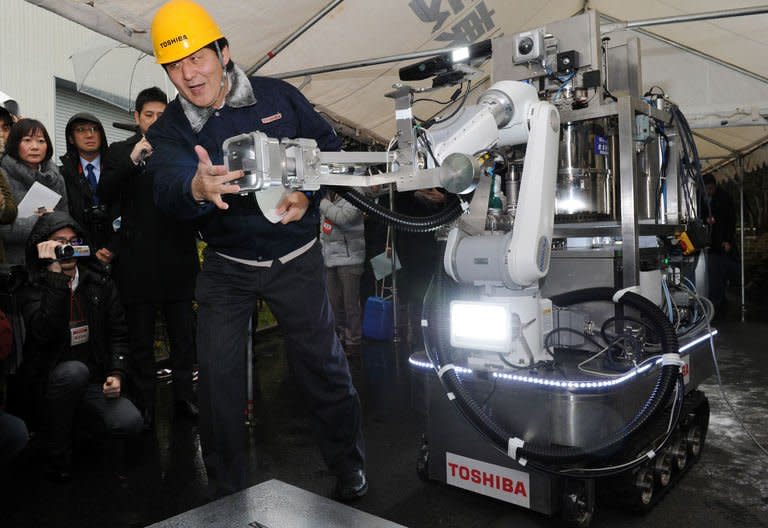
A remote controlled robot that uses dry ice to vacuum up radiation was unveiled by Japanese researchers on Friday, the latest innovation to help the clean-up at Fukushima. The caterpillar-tracked device blasts dry ice -- frozen CO2 -- against floors and walls, evaporating and carrying radioactive substances with it, engineers said. The nozzle also sucks up the resulting gases. The robot has two boxy machines the size of large refrigerators and moves on crawlers that are remotely controlled. Each machine has four cameras that allow the device to "see" what it is doing, an engineer told reporters. "As the machine blasts tiny grains of dry ice against the surface, the impact of it as well as the energy of evaporation help detach radiological substances," said Tadasu Yotsuyanagi of Toshiba, which developed the robot. "Since dry ice immediately gets sublimated into gas, it itself does not produce contaminated waste," he said, adding the technology was developed initially to scrape paint off airplanes. The robot can theoretically clean a space of up to two square metres (22 square feet) per hour, but the current system can only hold enough dry ice for half an hour. The engineers will test the robot first at a separate nuclear plant this month, aiming to introduce it to the battered Fukushima nuclear plant this summer, Yotsuyanagi said. The massive earthquake and tsunami of March 11, 2011, sparked an atomic emergency at the Fukushima Daiichi plant in the northeast of the country. Efforts to clear up after the worst nuclear disaster since Chernobyl in 1986 are still continuing, with high levels of radiation hampering operations. The decommissioning of the crippled plant is expected to take several decades. Toshiba in November unveiled a remote-controlled robot resembling a headless dog that they also hoped to use at the Fukushima power plant. The tetrapod, which weighed 65 kilograms (143 pounds) and was about one metre (3 foot, four inches) tall, was designed to be able to cover difficult terrain -- such as going up steep steps -- that regular robots struggle with. In December, it successfully photographed some of the critical part of the plant's reactor No 2, where high radiation makes it impossible for workers to walk in. But when it was sent for more inspection for the second time, it was hit by a series of defects, including falling backward on steps, the company said.
