
Nationwide strike in India against retail reform
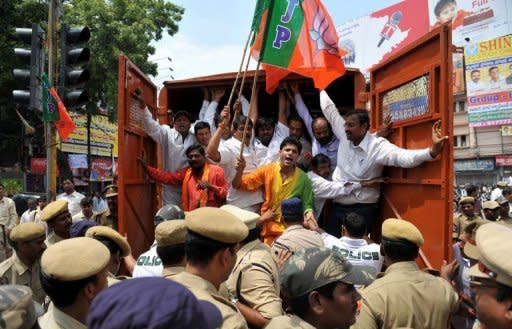

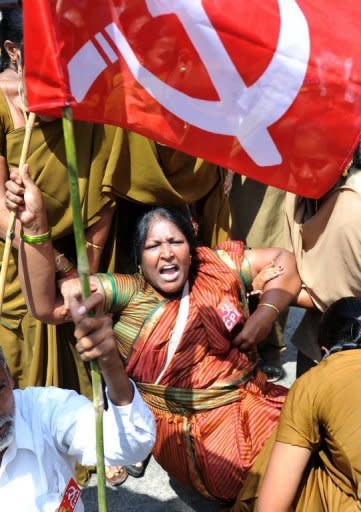
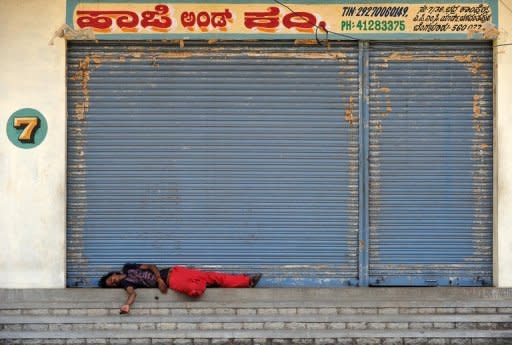
Shopkeepers, traders and labourers blocked railway lines and closed markets across India on Thursday in a nationwide day of protest against reforms allowing in foreign supermarkets such as Walmart. Opposition parties and trade unions called the strike after Prime Minister Manmohan Singh last week announced a raft of reforms designed to revive India's slowing economy, a move that has sparked a furious backlash. Kolkata, Bangalore and Chennai were among cities most affected by the 24-hour stoppage, with the majority of shops, factories, schools and offices shut down for the day. Protests were held across India with effigies of Singh burnt by demonstrators in Bangalore, while strikers blocked some national highways and major rail routes. "I am closed for today like most people," said Gautham Bhalla outside his small hardware shop in south Delhi's normally bustling Bhogal market. "This strike has my total support -- we will lose business if these big stores come." But the response appeared mixed in the capital with many shops remaining open. Mumbai, the country's financial capital, was also largely unaffected after local political parties declined to support the strike. Finance Minister P. Chidambaram vowed that the liberalisation programme would continue and he criticised the shutdown. "We will continue working for the greater good of the economy," he told reporters in Delhi. "In a democracy you have (the) right to protest but it is ironic that the way you are protesting is bad for the economy." Many small business owners and workers in India fear that the arrival of large-scale foreign supermarket chains will lead to drastic job losses as supply chains and shopping habits are transformed. Singh has been buffeted by reaction to the reforms and a sharp rise in heavily subsidised diesel prices. A key coalition party from the state of West Bengal has quit the government and demanded the policies be reversed. The Trinamool party said on Tuesday it had decided to withdraw support from the Congress-led ruling coalition in a move analysts said could cause the government to fall before the next election, due in 2014. But despite the opposition, the government Thursday pushed forward with its reform agenda by issuing a "notification" that it had put the plans down in writing, the PTI news agency reported. The move indicates the government is unlikely to roll back on its retail reforms but can now go on to negotiate deals with foreign supermarkets. Many schools in India were closed because of the strike, although most government offices remained open. The Confederation of All India Traders (CAIT) claimed that 50 million businesses were participating in the protest. "Multinational companies will destroy the economic and social fabric of the country," CAIT secretary-general Praveen Khandelwal said. The arrival in India of chains such as Walmart, Tesco and Carrefour is expected to herald a consumer revolution, with shoppers shifting from small, neighbourhood stores to large, out-of-town supermarkets. The government and many industry leaders argue that a modern retail system would improve value and choice for Indian consumers, create new jobs and enable farmers to reduce wastage. But Premier Singh, weakened by the worst quarterly GDP figures in three years and a series of corruption scandals, still faces a major challenge to push through the reforms and boost the economy before the next election. Arvind Singhal, chairman of retail consultancy Technopak, told AFP he expected it to be at least two years before the first foreign supermarkets opened in India. "The government anticipated this backlash and I am confident it will forge ahead," he said. "The big test for these companies coming here will now be real estate issues and very poor transport and logistics." In the states of West Bengal, Bihar and Uttar Pradesh, activists from the main opposition Bharatiya Janata Party (BJP) and other groups gathered on rail tracks, halting trains and leaving thousands of passengers stranded. Truck drivers also went on strike on Thursday over the 12 percent hike in diesel prices as the government attempts to tackle its widening fiscal deficit.
