
Singapore opposition makes election breakthrough
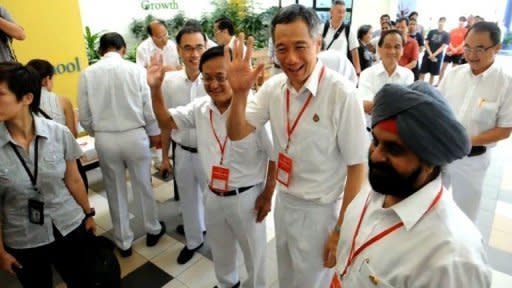
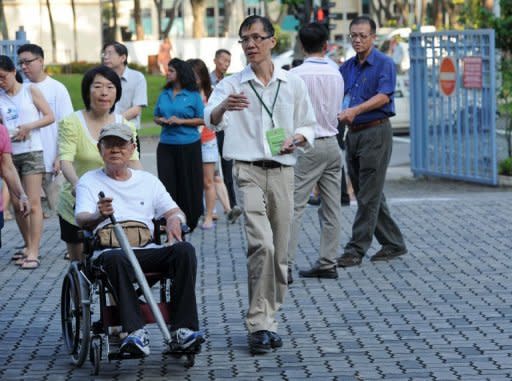

Singapore's ruling People's Action Party (PAP) was returned to power on Sunday with a huge majority but suffered a drop in popularity and lost a key district to a resurgent opposition. Prime Minister Lee Hsien Loong, 59, acknowledged that Saturday's parliamentary election marked a "distinct shift" in the political landscape of the city-state, which has been ruled by the PAP for the past 52 years. The opposition's win in six seats may be modest by international standards but is their best performance since Singapore became independent from the Malaysian federation in 1965. The PAP won 81 of the 87 parliament seats, down slightly from its victory in 82 out of 84 seats when Singapore last voted in 2006, and its share of all votes cast fell to 60 percent from 67 percent in the same period. "This is a watershed general election. It is taking place after five very eventful years. This is a very different world in 2011 as compared to 2006, and a very different Singapore," Lee said in a televised post-election address. He said the PAP will undergo "soul searching" and expressed willingness to work with lawmakers from the opposition, which won a record six seats and gave the PAP a tough fight across the island. Four days before the election, Lee apologised in public for the government's shortcomings after voters slammed the PAP for the rising cost of living, competition from immigrants and foreign workers, and other grievances. Compulsory voting ensured a high turnout on Saturday, with close to 2.06 million people -- 93 percent of the electorate -- casting ballots. In the most intensely fought contest, Foreign Minister George Yeo and four other PAP candidates lost to the Workers' Party in a group constituency, forcing him out of the cabinet. A single-seat ward also voted for the Workers' Party, a pro-poor group of lawyers and professionals. The opposition's previous best result was four seats in 1991. Bridget Welsh, a political science professor at the Singapore Management University, stressed the significance of the opposition's first ever win in a group representation constituency (GRC), a setup widely seen as favouring the ruling party but now shown to be vulnerable. "The GRCs have been a cornerstone of one-party dominance in the Singapore state, and the breaking of its GRCs is really allowing a diversity of political views in the country," Welsh said. Six opposition parties took part in the election with the modest goal of winning more seats from the PAP -- resigned to the dominance of the party that led Singapore to political independence and economic prosperity. They divided electoral districts among themselves to fight the PAP on several fronts. "The opposition has come together in terms of not contesting against each other. When push came to shove, they put aside personal differences for the larger cause of opening up political space," Welsh said. The PAP was co-founded by the prime minister's father Lee Kuan Yew, who governed Singapore for 31 years and was re-elected to parliament unopposed on Saturday at the age of 87. Tens of thousands of supporters attended opposition rallies held over the past week, far greater than the PAP's crowds. The opposition also relied heavily on the Internet, particularly social media platforms such as Facebook, YouTube and Twitter, because the mainstream local media are widely regarded as PAP mouthpieces. The PAP has long touted its economic record to convince Singaporeans to return it to power and kept the opposition in check by imposing curbs on political activity except during elections. The economy grew a record 14.5 percent in 2010 and per capita gross domestic product stood at Sg$59,813 ($48,271), according to the statistics department, making Singaporeans the second wealthiest Asians after the Japanese. But the prosperity has not been spread evenly, and inflation this year is forecast at 3.0-4.0 percent, high by Singapore standards.
