
Sex, drugs, stigma put Thai transsexuals at HIV risk
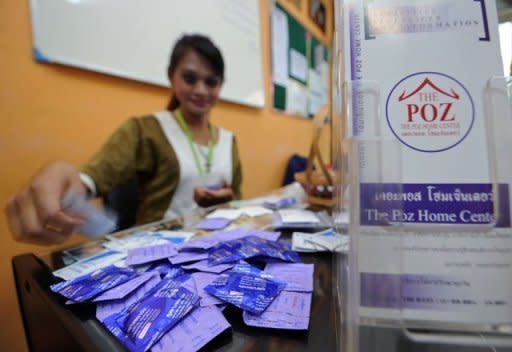



From a cafe near the go-go bars of a Bangkok red light district where she campaigns for safe sex, Gigi gives an unvarnished view of how she joined Thailand's growing ranks of transgender people with HIV. Sex work and injecting drugs left the 40-year-old vulnerable to the disease, which she was diagnosed with six years ago. "Some men used condoms... some didn't. Sometimes the condom broke," she says without rancour of her time turning tricks in Pattaya -- one of the centres of Thailand's flourishing sex industry and home to 3,000 transgenders in tourist season. Soft spoken and slight with a dusting of make-up over her wan face, Gigi cuts an image far from the caricature of the bawdy "Katoey", as Thailand's estimated 180,000 transgenders -- or "ladyboys" -- are known. But her recollection of life after her diagnosis is still shocking. "I had sex with lots of partners," she says. "I thought I was going to die soon... so I wanted to be happy." Antiretroviral drugs have so far spared Gigi the worst of the sickness, allowing her to leave prostitution to work as an activist, dispensing condoms and safe sex advice to young transgenders in the Thai capital. It is, health campaigners say, an increasingly important job. Gigi's work often takes her to red light districts such as Patpong, an area notorious for its raunchy nightlife, where dozens of transgender prostitutes flit among the sprawl of sex shows, pick-up bars and massage parlours. Infection rates among transgenders are thought to be on the up, as high-risk lifestyles, including prostitution and drug use, and a lack of targeted healthcare take their toll on one of the kingdom's most marginalised groups. Truvada, a breakthrough HIV prevention pill approved by US regulators this month, is likely to prove too expensive for most Thais at risk of infection when it eventually hits the market. Around 530,000 Thais overall are estimated to be living with HIV, according to a United Nations AIDS study from 2010. There are no nationwide HIV statistics specific to the "third sex", reflecting what activists say is their position on the fringes of society, but local surveys indicate the illness is rife. Eleven percent of transgenders surveyed in Chonburi -- the province containing Pattaya -- had HIV, soaring to 20 percent among those aged 29 or over, local government figures released this year found. It chimes with a stark regional view given by a United Nations Development Programme (UNDP) report published in May. That study said HIV prevalence rates among transgenders across the Asia-Pacific could be as high as 49 percent -- albeit from scattered and often small-scale research -- a frequency that "far exceeds the general population". Sex work, drugs and stigma collude with a lack of healthcare to push many of the region's third sex population to the "social, economic and legal" margins, the study added. Thailand-based activists say things are getting worse as young transgenders edge into sex work and fail to undergo regular testing -- a quarter of 300 transgenders questioned in Pattaya in 2009 had never taken an HIV test. "It's not a passing trend... if things go on unaddressed the problem is going to become a lot more severe," says Alex Duke of PSI, a global health organisation which led that survey and also runs clinics tailored to transgenders. Chaotic lifestyles compound the challenges of HIV diagnosis and treatment, he explains, with many among the community focused on making money to support themselves or undergo expensive hormone treatment and sex-change surgery. "HIV is also just one of a whole range of risks transgender people encounter every day," he adds, referring in particular to the threat of violence against sex workers. Infection rates are intertwined with the wider issue of discrimination, according to transgender researcher and activist Prempreeda Pramoj Na Ayutthaya, who says health services, education and job opportunities routinely fail to reach the community. While Thailand's famously permissive attitude affords a cultural space to the third sex, the law still refuses to recognise their new sexual identity, rooting discrimination in the kingdom's bureaucracy. "Nobody will hit a transgender person in the street or abuse them, but it is still hard to get a decent job," Prempreeda explains. "Many transgender people find that sex work is the only way to make a small amount of money and maintain their identity." Travails begin early, with transgenders often rejected by their families and schools, decimating their employment prospects later on. The result, she says, is social immobility and high numbers of transgenders working in prostitution or cabarets, which sometimes blur the lines between entertainment and sex work. Duke says he encounters a dearth of "long-term aspiration or sense of consequence" among many transgenders, and worryingly his group has found rising HIV rates among younger people, suggesting risky behaviour is intensifying. One solution is to direct resources specifically at transgenders in an effort to diagnose and treat those with HIV, prevent new infections and build a more detailed picture of how the illness is hitting the community. But responsibility also falls on the community to make sexual health a priority, something it is increasingly well organised to do. As she prizes open a tin box and heaps her daily prescription of pills into a palm, Gigi says her community is ready to address the problem as long as services recognise their unique gender identity. "There are a lot of young people in trouble like I was," she says. "But we can help them. Just treat us like people."
